Live-in Care
A trained carer lives with you in your own home, full-time. The realistic alternative to a care home.
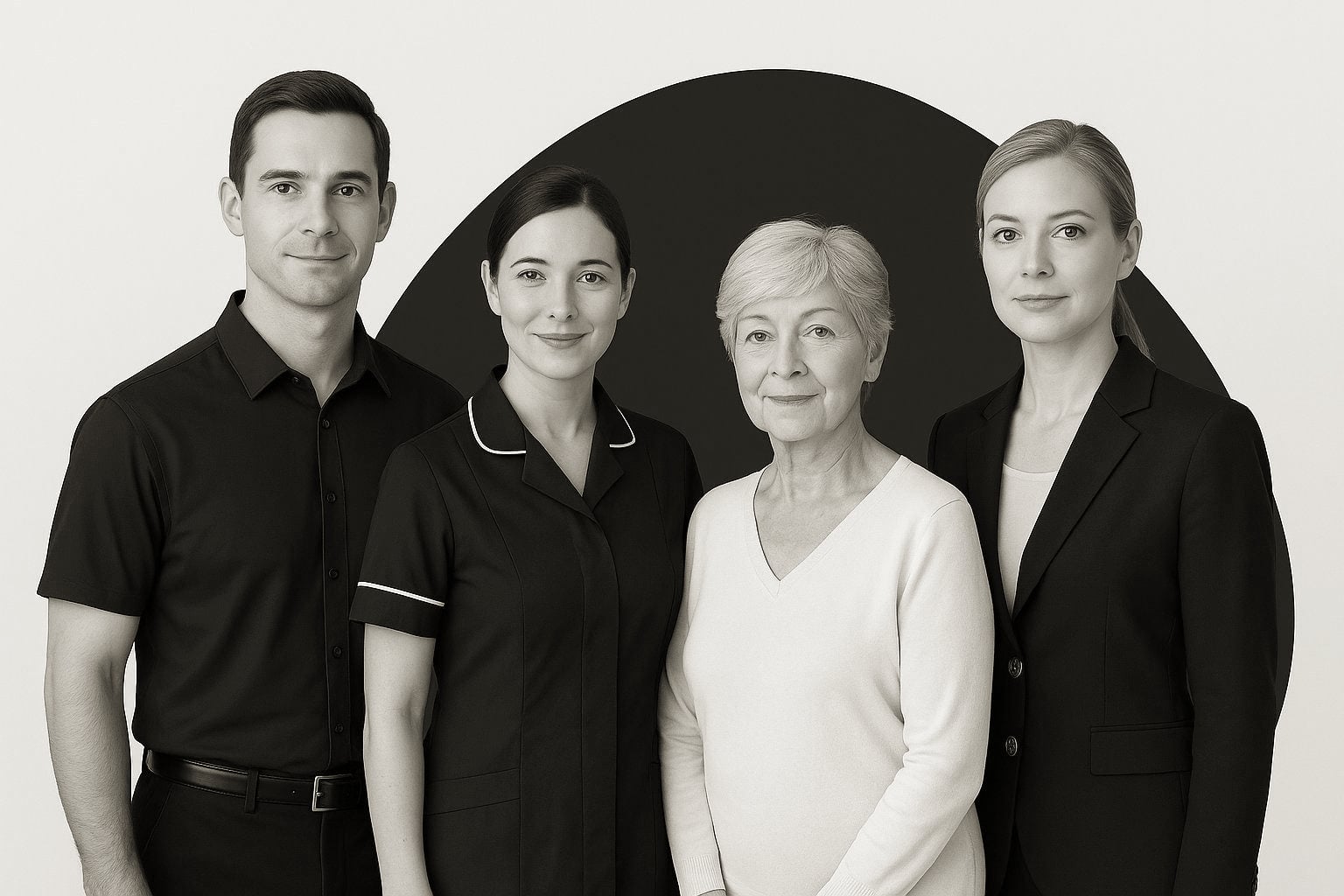
Live-in care is what it sounds like. A trained carer lives in your home, full-time, and is there for everything: morning routines, meals, the hours in between, and the reassurance of someone in the house overnight.
For most families it becomes a serious option when visiting care is no longer enough but the thought of a care home feels wrong. The person stays in their own bed, in their own kitchen, with their own things, and gets the support they actually need.
It works best for people who value their independence and routine, and for couples where one partner has been quietly carrying everything and needs to be a husband or wife again, not just a carer.
What’s included
- A trained, DBS-checked carer in your home full-time
- All personal care, medication support, and mobility help
- Cooking, light housework, laundry, shopping
- Companionship and outings, paced to what the client enjoys
- Pet care where needed (we are happy to walk the dog and feed the cat)
- Coordination with district nurses, GPs, and other professionals
- Two-week minimum, no upper limit on how long care continues
- A back-up carer ready to step in within hours if anything goes wrong
How it works
We start with a long, careful assessment in the home. We need to understand the person, the routines, the pets, the layout, and what good looks like for the family. We then shortlist two carers we think will fit, and you meet both before choosing. Once care starts, the registered manager visits in the first week, and again at six weeks, and quarterly thereafter. We are always one phone call away.
The people we tend to support with this.
Adults who need round-the-clock support but want to stay at home
Couples where one partner is the main carer and is burning out
People with dementia who are unsettled by changing faces and a care-home environment
Talk to a human.
A real conversation, no obligation, no pressure.
Things families ask us most.
Where does the live-in carer sleep? +
In their own room in your home. It needs to be a private bedroom with a bed, storage, and access to a bathroom. The carer is on duty during the day and on call overnight, with two hours of break time each day for themselves.
How does it compare in cost to a care home? +
For one person it is usually 10 to 30 percent more than a residential home. For couples, where two people would otherwise need two care home places, live-in care is almost always cheaper as well as kinder. We will work the numbers honestly with you, no hard sell.
What happens when the live-in carer needs a break? +
Carers do two-to-four week rotations. The next carer arrives a day before the first leaves so there is a proper handover. You meet both carers in advance and we keep the rotation small (usually two carers swapping) for continuity.